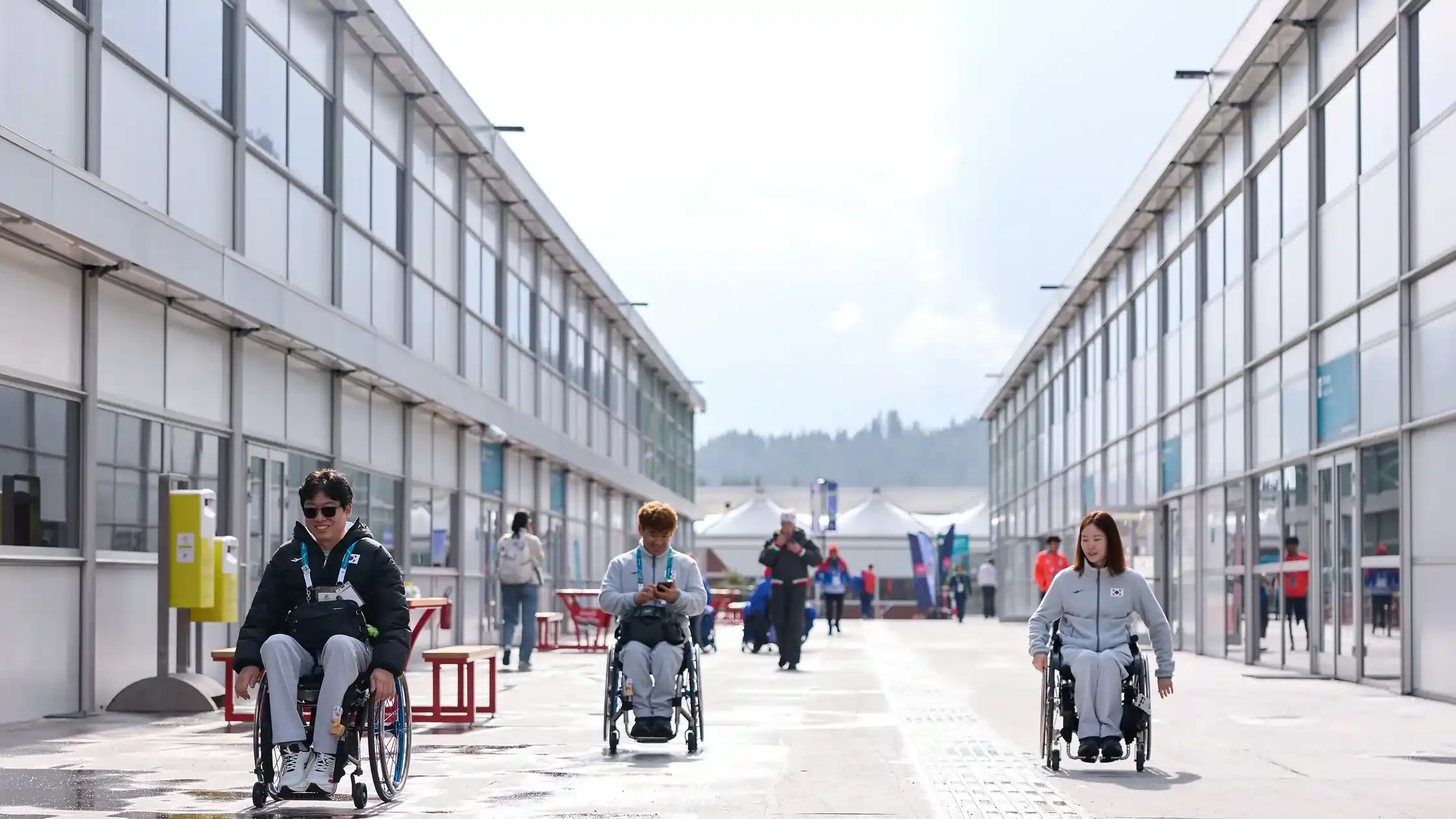
Upon arriving at the Paralympic Village during the Milano Cortina 2026 Paralympic Winter Games, there was a sense of relief. After traversing Milan's cobblestone roads and uneven terrain as a wheelchair user, the smooth ramps and accessible spaces within the Paralympic Village were a welcome change. The Paralympic Village spanned across Milan, Cortina d’Ampezzo, and Predazzo and provided a self-sustaining city for 1,500 athletes.
The spaces within the Paralympic Village were specifically designed for athletes with disabilities and were free of obstacles such as steps or uneven surfaces. There were no transitions between surfaces or uneven terrain within the Paralympic Village. There were even accessible picnic tables and rooms for rest and quiet spaces for those with sensory disabilities. The presence of an Ottobock repair shop within the Paralympic Village, where prosthetics and wheelchairs were free to repair, was another welcome change for disabled athletes. In most places in the United States, prosthetics and wheelchair repair can be extremely costly and require long wait times. The disabled athletes were not exceptions within the Paralympic Village but were instead the norm.
This level of accessibility was not an accident but was planned and implemented. According to the designer of the village, Federica Sechi, “Accessibility has been thought about from the very beginning in the design of the village in Italy, following the Italian norms and involving disabled athletes and experts in every phase.” Unlike most buildings in which the design for accessibility is an afterthought, the design of the Paralympic Village was such that the disabled athletes were considered from the very beginning. This changed even the smallest of elements, such as the laundry machines placed at ground level, into powerful statements of independence and dignity.
Although not everything was perfect in the village, it was an indication of what was possible when resources were in place. The athletes, such as Brenna Huckaby, were clear about the fact that the right equipment and environments were the key to unlocking the potential of the human being. The village was only in existence for a short time, but it was powerful in the sense that it was an indication of what the future would be like. The message was clear: accessible and inclusive cities were not just possible but entirely achievable.

Written By
Lily Adam shares lifestyle, wellness, and modern living inspiration, blending fashion with travel, home, and mindful experiences.