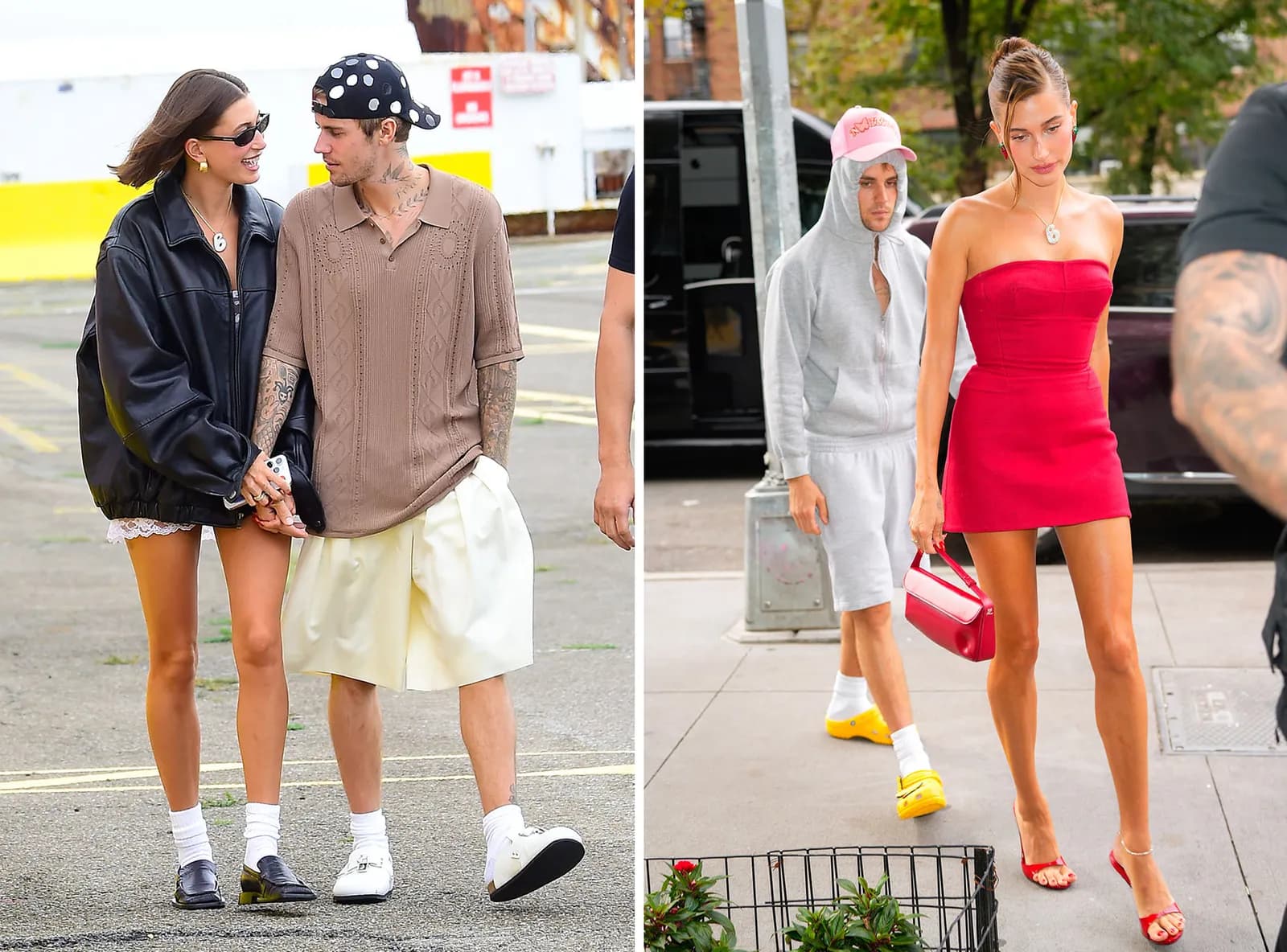
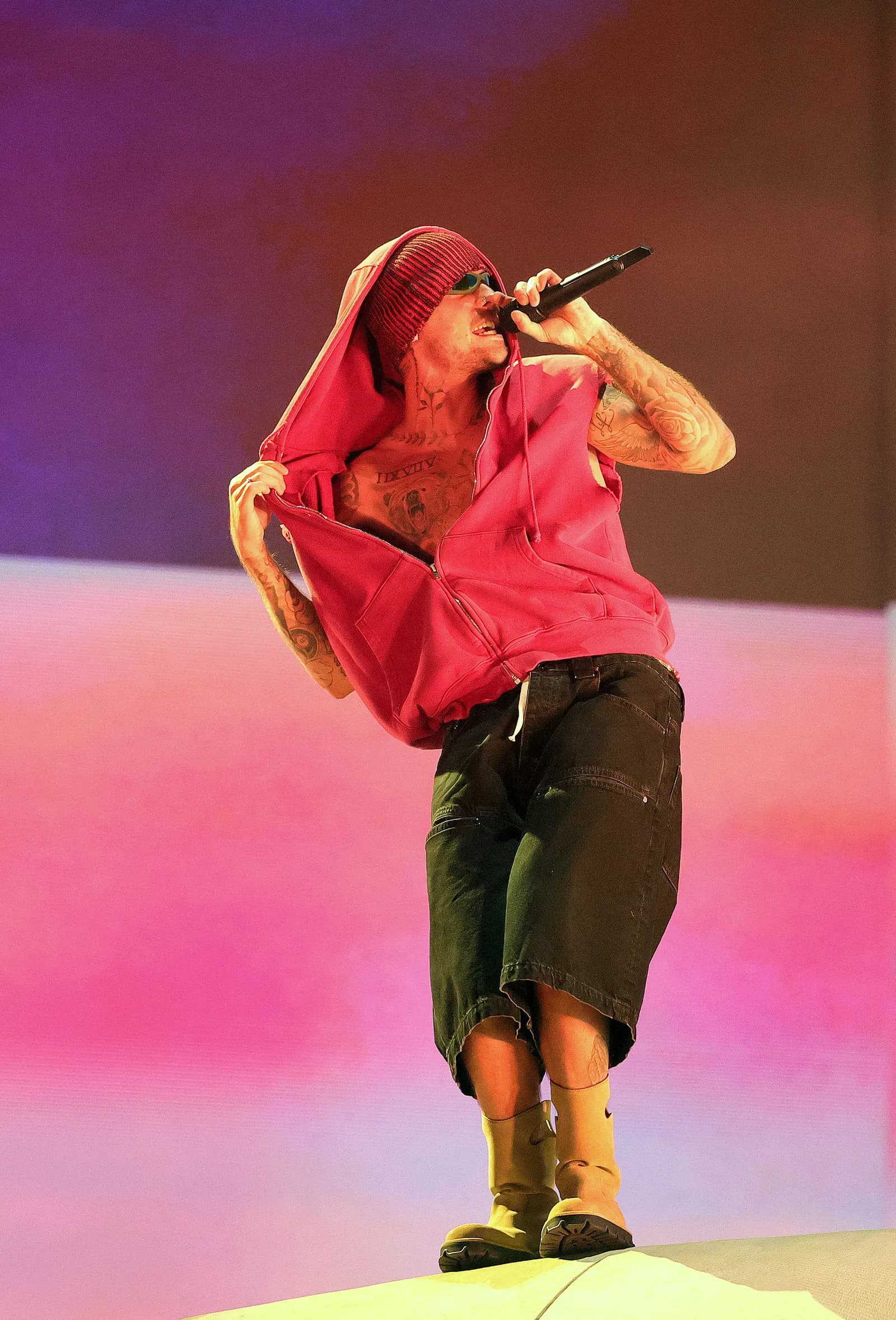
As Bieberchella wrapped up, it became clear just how much the Bieber brand is dominating the cultural and commercial landscape. After Justin Bieber’s high-energy performance on Saturday night, social media erupted with clips highlighting his triumphant Coachella return. The star revisited his childhood hits—songs that defined a generation—and showcased his roots, including a special moment with Billie Eilish, a self-professed Bieber superfan, who joined him on stage to sing “One Less Lonely Girl” while his wife, Hailey Bieber, watched proudly from the sidelines.
The Biebers are not just a celebrity couple—they are a powerhouse in the business world. During both weekends of Coachella, their power was on full display, showing off a carefully planned and profitable empire. Justin wore his own brand, Skylrk, during his performance and sold an incredible $15 million worth of merchandise, breaking the previous record of $1.7 million for a two-weekend event. The brand also hosted a Skylrk Oasis at the festival, where people could relax in the mist and shop, bringing in $2.3 million in merchandise-influenced revenue (MIV) on the first weekend alone. The presence of Hailey and Kylie Jenner sporting Skylrk gear on Instagram only amplified the hype.
Meanwhile, Rhode, which was acquired by Elf Beauty last year for a staggering $1 billion, expanded its presence with “Rhode World,” an immersive experience away from the festival grounds. The pop-up drew influencers and fans alike, generating a remarkable $10 million in MIV during the first weekend, with additional figures still pending from the second.
According to Parisa Parmar, senior creative strategist at agency Attachment, “The Biebers are a true unicorn pairing in the attention economy.” She explains that Justin’s unique ability to connect with a lifelong audience, cultivated since his early teens, creates a sense of emotional proximity that many celebrities lack. “For many, he doesn’t just feel famous—he feels familiar,” she says. “Together, they embody a modern aspirational partnership—young, hyper-visible, creatively active, yet grounded in a cultural relevance that resonates with Millennials and Gen Z navigating love, identity, and ambition publicly.”
Their combined branding efforts extend beyond music. In February, Skylrk announced Hailey Bieber as its first campaign star, launching a capsule collection co-created by the couple that generated $520,000 in MIV within a week. Leading into Coachella, the pair collaborated on Rhode “Spotwear,” acne patches featuring playful shapes like mushrooms and beans, in a colorful palette that aligns with Justin’s Skylrk aesthetic. These products bridged the two brands and marked the couple’s most significant public appearance since their wedding in 2018.
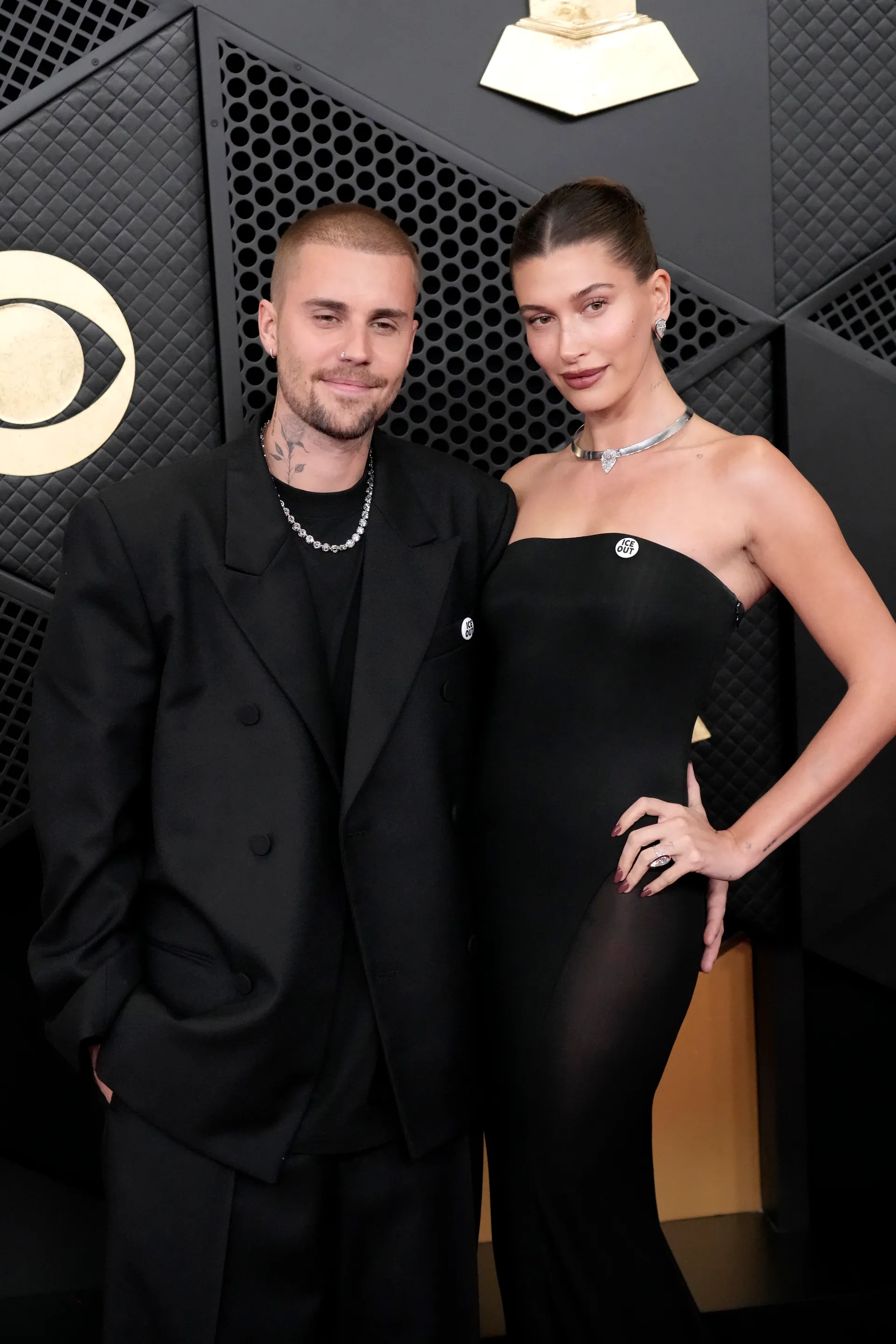
Since its debut on April 5, “Spotwear” sparked conversations worth $7.3 million in MIV in just one week, with a viral carousel of selfies of Justin and Hailey earning $1.6 million. After its official launch on April 13, the collaboration pulled in an additional $1.9 million in MIV, with top posts raking in hundreds of thousands.
Both Skylrk and Rhode have cultivated distinctive brand identities that now feel inseparable from the Biebers’ image. Their success hinges on a strategic mix of attention-grabbing design, virality, and real consumer engagement. “Their products are crafted to stand out in a saturated social media landscape,” Parmar notes. “Bold shapes, textured finishes, playful names—these elements invite interaction, whether on a handbag or a phone screen.”
Though the couple’s use of their relationship as a marketing tool is a relatively recent development, they have long understood its power. Justin’s appearances at Rhode events and Hailey’s frequent presence at his performances have always reinforced their cohesive brand. However, their recent Coachella performances highlighted a sophisticated understanding of how their personal brand can boost their commercial ventures.
According to Annie Corser, senior trends editor at Stylus, “Justin offers longevity rooted in nostalgia for the 2010s Americana, appealing to Millennials, while Hailey, a Zillennial, brings fresh credibility with younger audiences. Her visibility in the media through platforms such as TikTok and Instagram ensures that their appeal remains relevant.” Furthermore, she states that when taken together, they create their own niche in popular culture that is both relatable and current, which enables them to build their own individual identities within it.”

Written By
Scarlett Hayes analyzes fashion business trends, brand strategy, and global retail insights shaping the industry’s future.