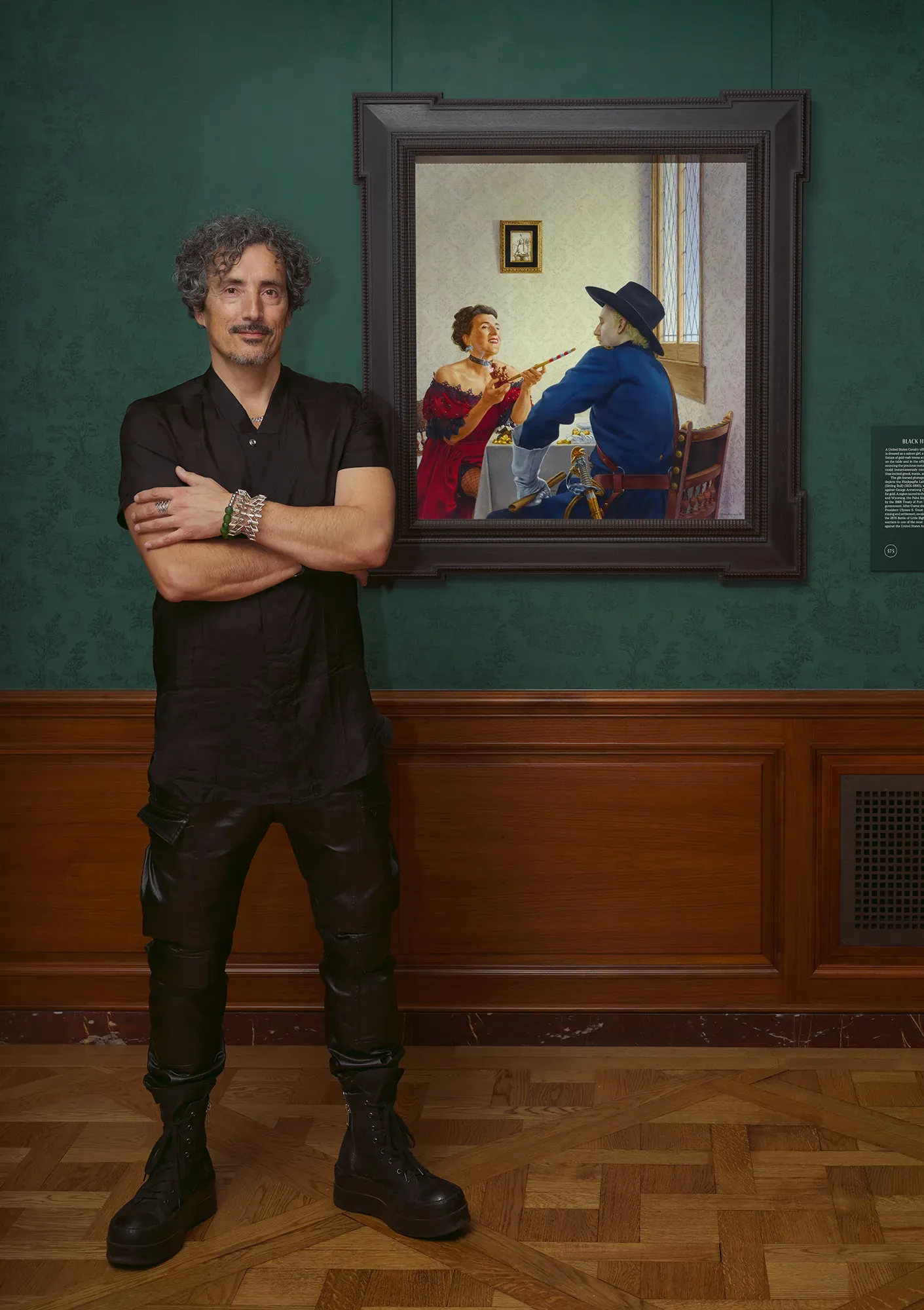
Indigenous artist Kent Monkman presents a new exhibition at the Frick Collection, reinterpreting Johannes Vermeer's 1657 painting Officer and a Laughing Girl through Indigenous history, culture, and identity.
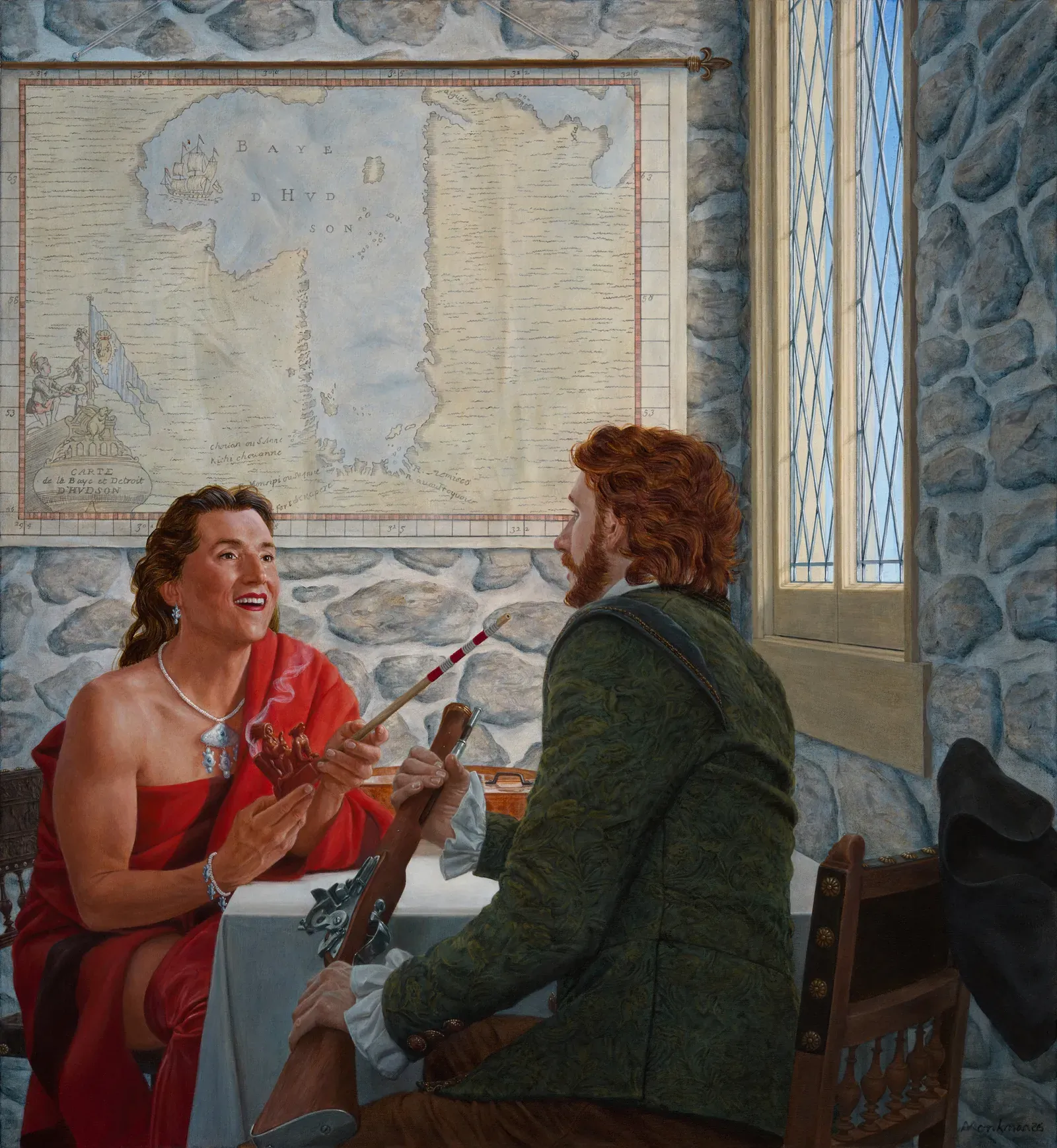
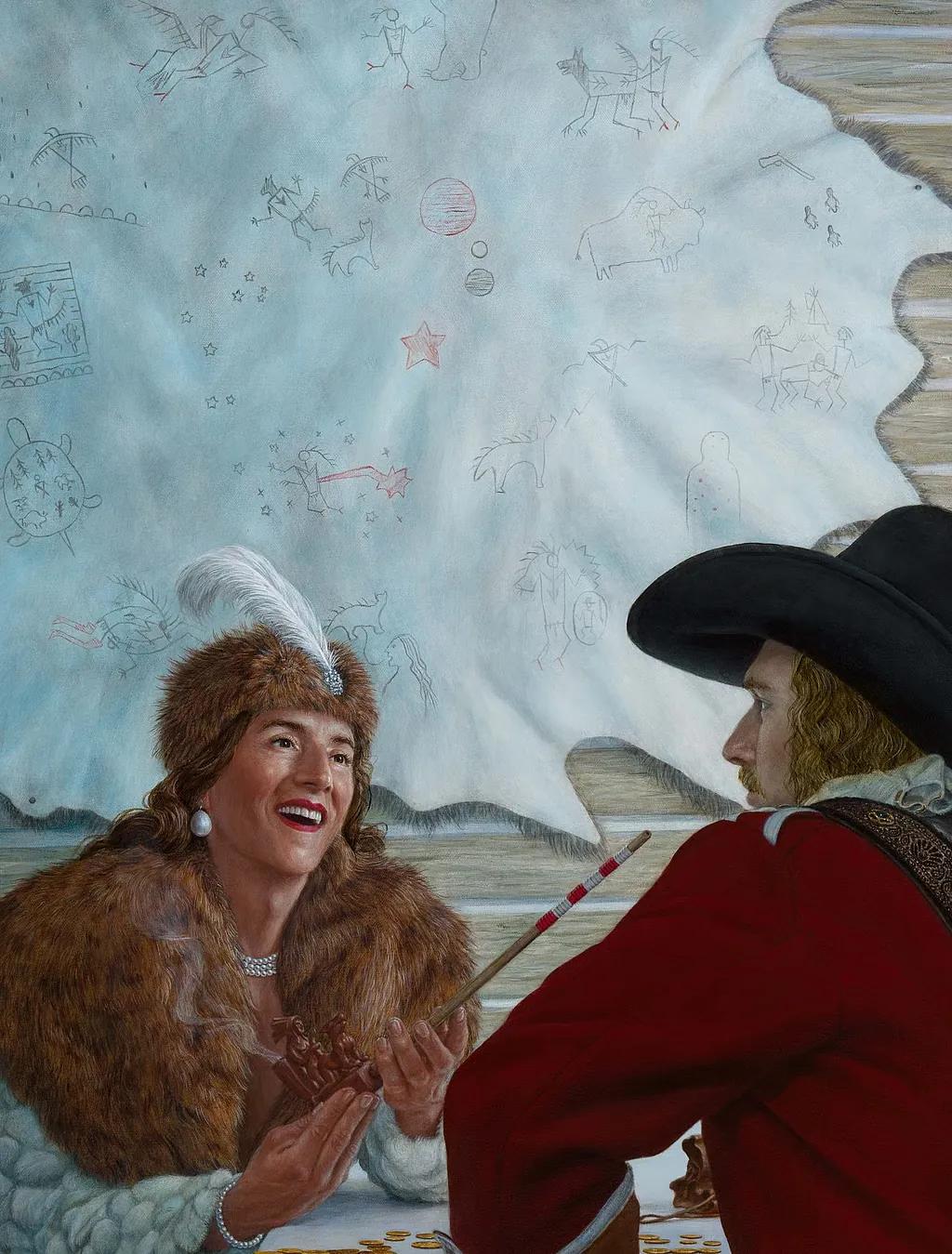
Inspired by the historical significance of beaver pelts in North America's fur trade, Monkman created five versions of Vermeer's original artwork, each representing a different historical period, from the 1600s to the 2000s. His genderfluid alter ego, Miss Chief Eagle Testickle, replaces the woman in the original painting, becoming the central figure in this artistic reinterpretation.
The five paintings explore significant moments in Indigenous history, including colonial encounters, fur trading, territorial dispossession, Indigenous resistance, and contemporary cultural identity. Historical references include trade-silver jewelry, Lakota leader Sitting Bull, and maps of Native American reservations.
Fashion, Cultural Identity and Indigenous Representation
Fashion and accessories play an important role in the exhibition. Through traditional clothing, jewelry, and contemporary Indigenous designs, Monkman highlights the relationship between cultural heritage and personal expression.
The paintings also communicate broader environmental and social messages. Their changing colours symbolize climate change, while the use of red expresses solidarity with Missing and Murdered Indigenous Women.
Through historical references, humour, and artistic storytelling, Monkman challenges traditional European perspectives on history. His exhibition celebrates Indigenous resilience, creativity, and cultural continuity while encouraging visitors to reconsider the narratives surrounding colonialism and Indigenous identity.

Written By
Isabella Rossi explores fashion, art, and culture, connecting global trends with deeper social and creative narratives.